Cord guide
How to choose an extension cord: length, gauge and where it runs
A cord is rated for its length and its wire. Here is how to pick one that stays cool.
An extension cord is rated for two things at once: the thickness of its wire and its length. The same 16-gauge wire that carries 13 A over 50 ft carries only 10 A over 100 ft, because a longer run warms up more under the same current. Get those two right and the rest follows.
Length and gauge
Wire gauge (AWG) counts down as the wire gets thicker, so 14 AWG is heavier than 16 AWG. The Electrical Safety Foundation publishes this table of the current each gauge can carry at each length:
| Cord length | Gauge | Up to |
|---|---|---|
| 25 to 50 ft | 16 AWG | 13 A |
| 25 to 50 ft | 14 AWG | 15 A |
| 100 ft | 16 AWG | 10 A |
| 100 ft | 14 AWG | 13 A |
| 100 ft | 12 AWG | 15 A |
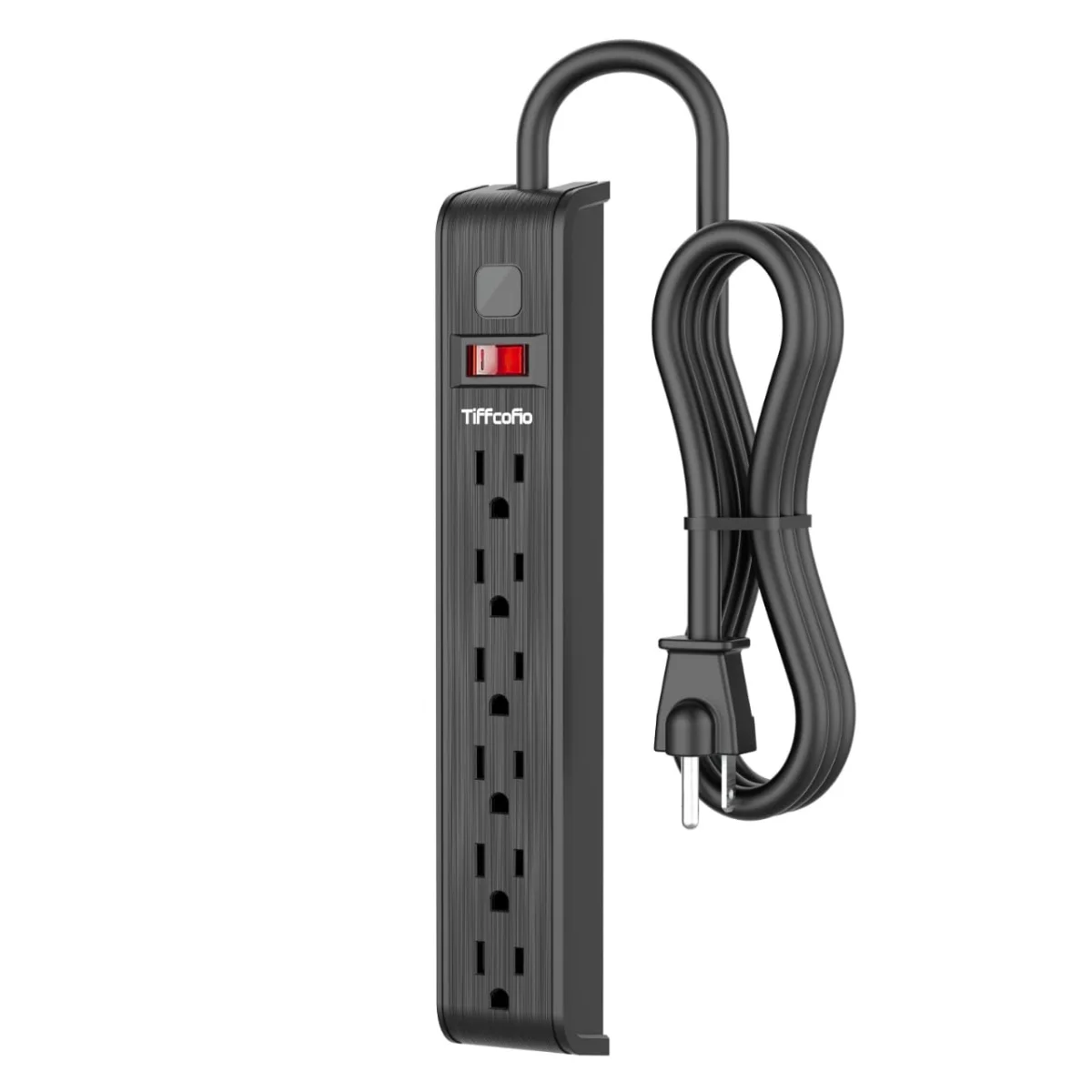
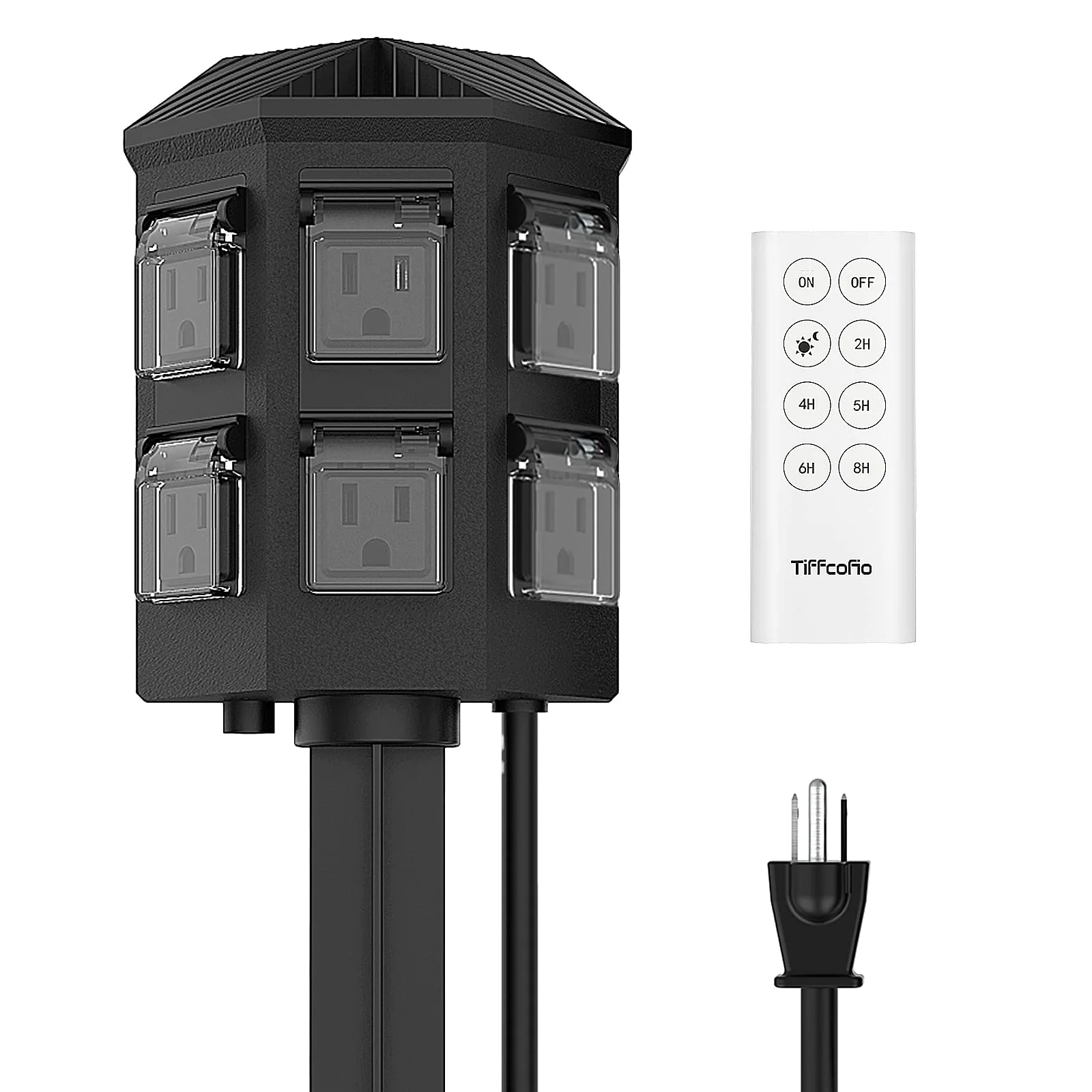
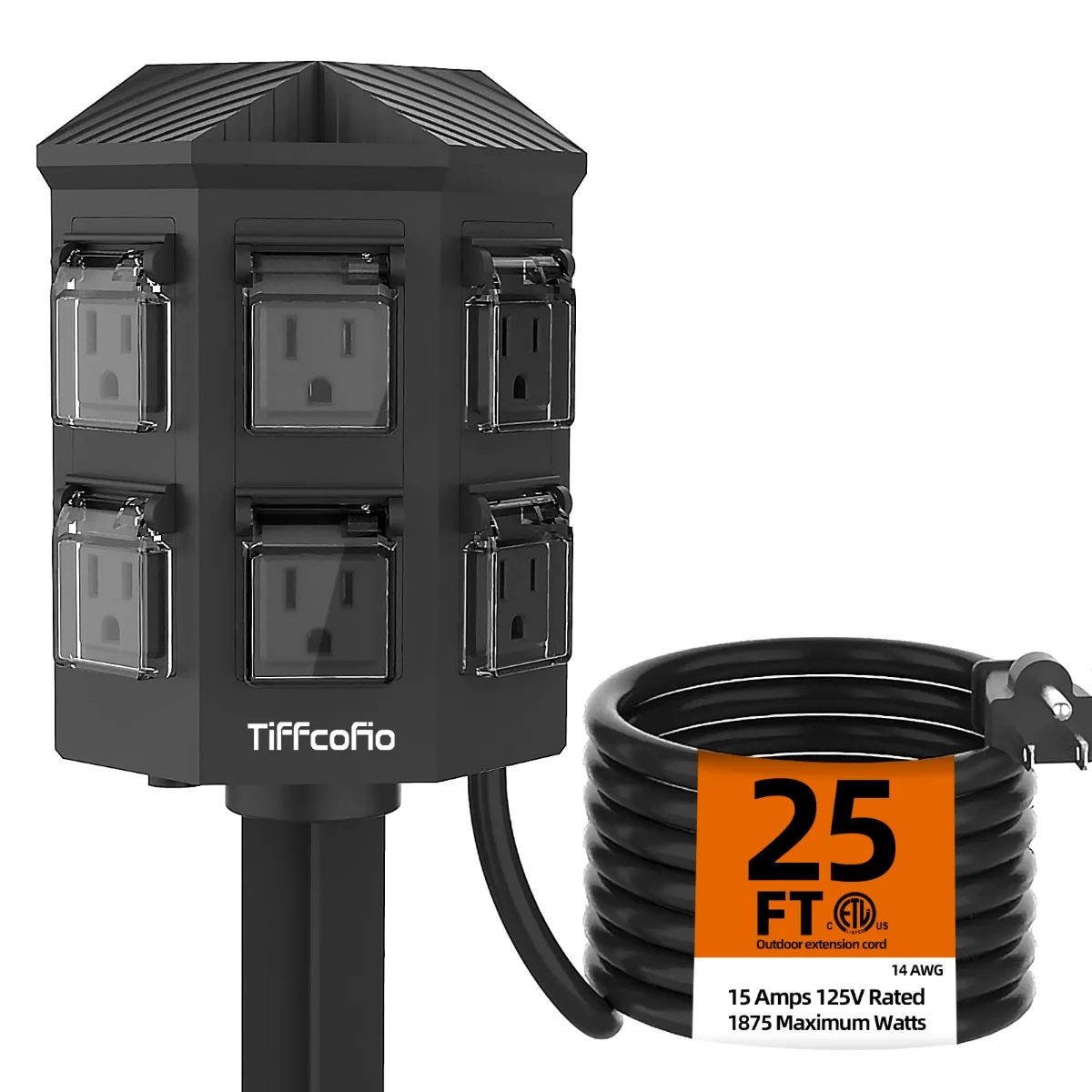
That is why our 16 AWG outdoor cord is rated 13 A in its short lengths and 10 A at 100 ft, and why the long surge strips and power stakes use 14 AWG. To pick a length, measure the route the cord will follow along the ground or the wall, not the straight line, add a couple of feet, and take the next length up.
Indoors or outdoors
Use a cord marked for outdoor use outside. The U.S. Consumer Product Safety Commission lists a jacket over the wires as a required feature of outdoor cords, and OSHA asks for 3-wire grounded cords. Our indoor/outdoor cords are 3-prong, 16 AWG, from 3 to 100 ft. The 2-prong cords with safety shutters and the flat plug cords are for indoors only.
2-prong, 3-prong and flat plugs
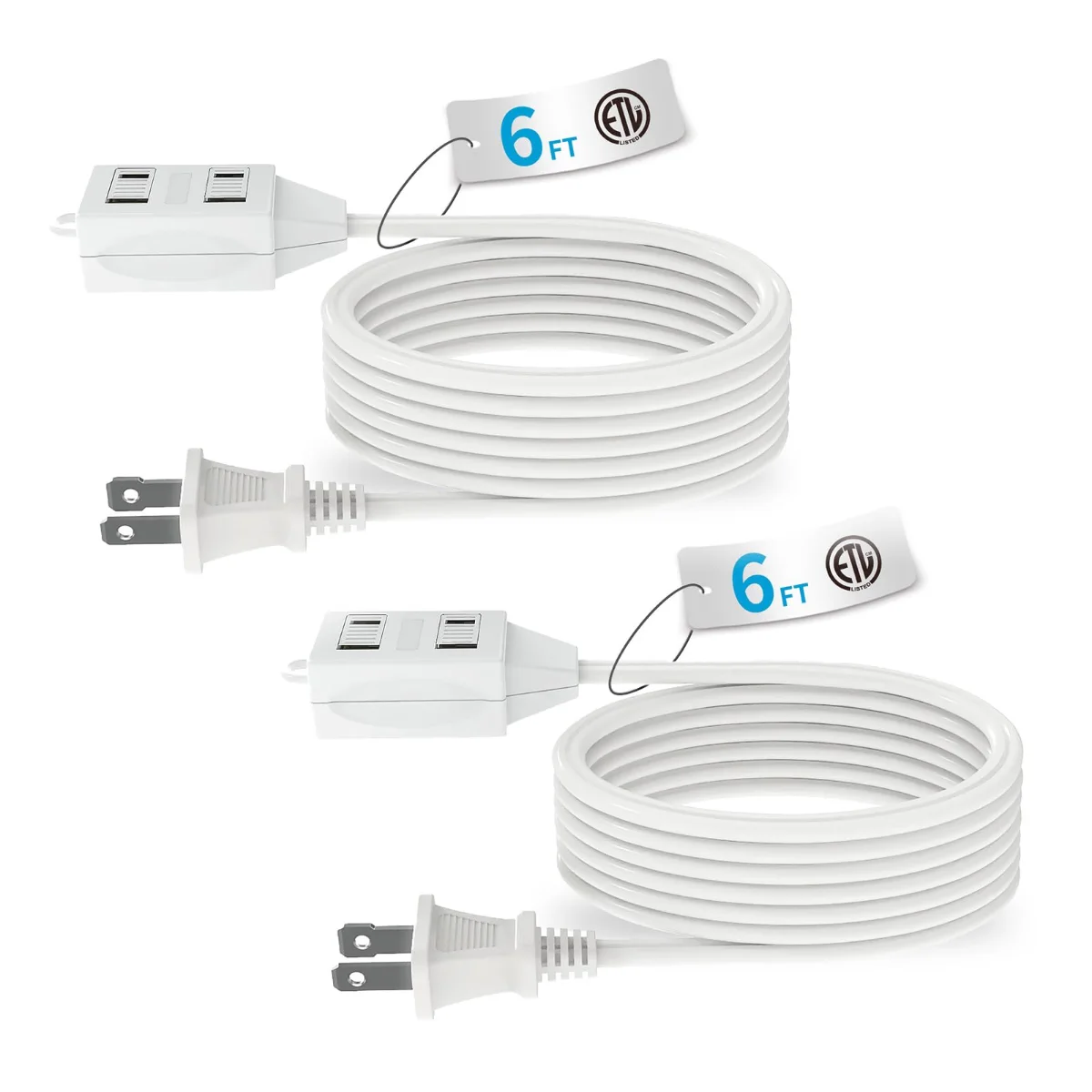
A 2-prong polarized cord suits lamps and chargers with 2-prong plugs. Anything with a grounded 3-prong plug needs a 3-prong cord, and the Electrical Safety Foundation warns never to cut off the ground pin to make it fit. A flat plug lies against the wall, so furniture can stand close to the outlet.
Using a cord safely
- Treat an extension cord as temporary. If you rely on one every day, the room needs another outlet.
- Add up the watts of what you plug in and stay under the cord rating. Heaters and major appliances go straight into a wall outlet.
- Do not run a cord under a rug, through a doorway or through a wall, where it cannot shed heat or gets pinched.
- Do not chain one multi-outlet device into another. Pick a cord long enough instead.
- Replace a cord that is cut, cracked or feels hot.
These points come from the Electrical Safety Foundation and the U.S. Fire Administration, listed below with the date we read them.
In the range
The cords and strips people rate most

Ready when you are
Pick the product, then the length
Every length, pack and outlet count in the TiFFCOFiO selection is one click from here, and you pick the exact one on the next page.

The button opens the full range at our retail partner in a new tab.