
Outdoor lights
How to power a yard of holiday lights from one outdoor outlet
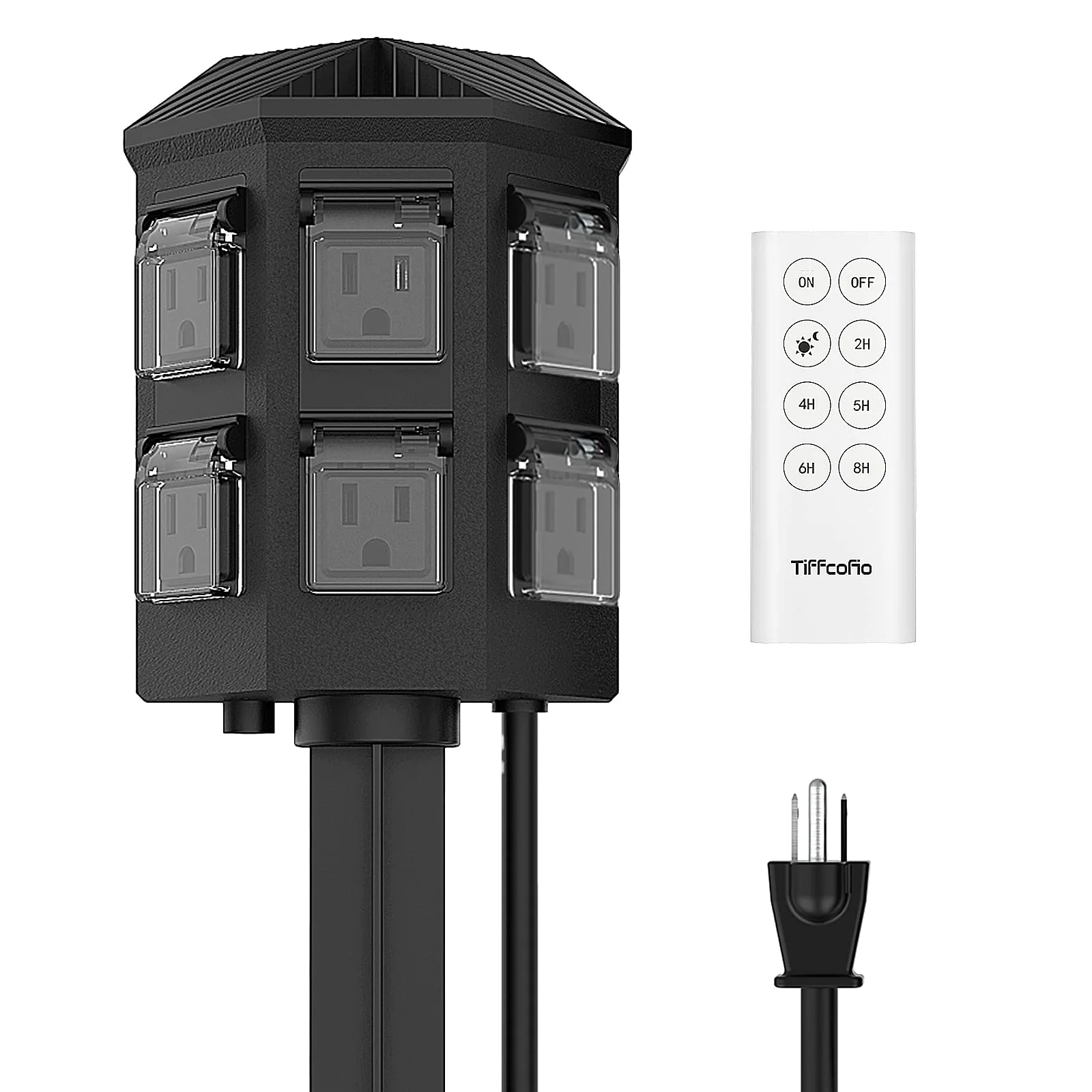
Most houses have one outdoor outlet, usually by the front door or on the back wall, and most holiday plans have lights on the porch, the railing, a tree in the middle of the lawn and an inflatable by the drive. Running a separate cord to each ends in a tangle across the grass. The fix is to bring outlets out to where the lights are, put one timer in charge, and check the total load once.
Step 1: start at a GFCI outlet
Plug everything into a ground-fault protected outlet, the kind with test and reset buttons. The U.S. Consumer Product Safety Commission asks for exactly that for outdoor lights, and for lights that are certified for outdoor use. If your outdoor outlet has no GFCI, a portable GFCI plugs in between.
Step 2: add up the watts
Every light string and inflatable has its watts on a tag or on the box. Add them up for everything that will share one outlet, then compare the total with the rating of the stake, timer or cord it runs through. Here is the arithmetic for an example yard, with made-up labels:
| Item | Label | Count | Watts |
|---|---|---|---|
| LED string on the railing | 24 W | 3 | 72 W |
| LED net on the hedge | 36 W | 2 | 72 W |
| Inflatable with a blower | 100 W | 1 | 100 W |
| Total | 244 W |
Our plain 6-outlet power stake is rated 15 A and 1875 W, and our outdoor timers 15 A, so 244 W sits far inside either rating. Old incandescent strings draw many times more than LED ones, which is where the sum starts to matter.
Step 3: bring the outlets to the lights
A power stake puts six covered outlets on a spike in the lawn at the end of its own cord. Push it in next to the tree or the inflatable, plug the strings in there, and run one cord back to the house. For lights spread in three directions, the outdoor 1-to-3 splitter turns one outlet into three at the end of a 25 or 35 ft run.
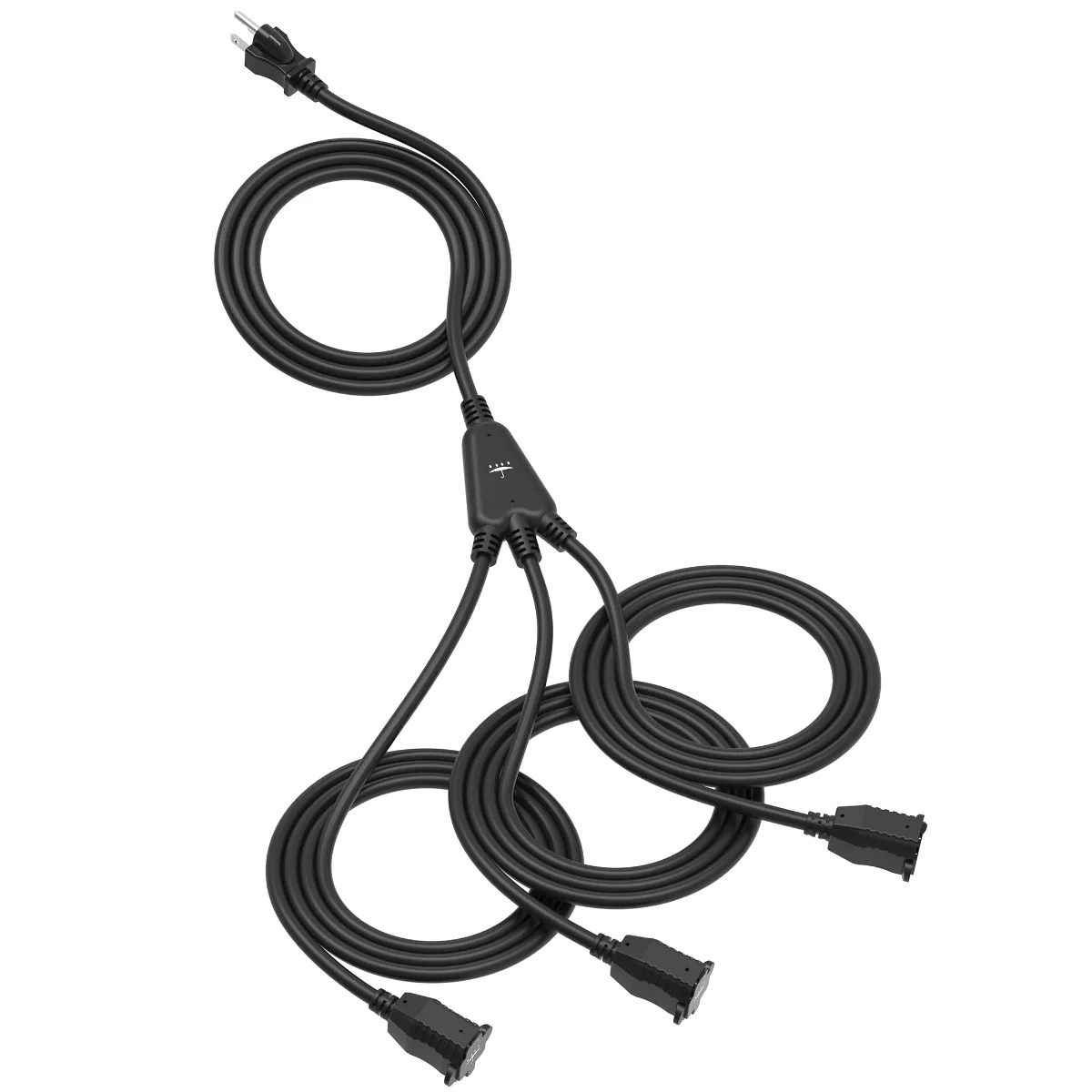

Pick the cord length by the path, not the straight line, and pick a stake that reaches on its own cord rather than adding an extension. The Electrical Safety Foundation advises against chaining one multi-outlet device into another.
Step 4: put one timer in charge
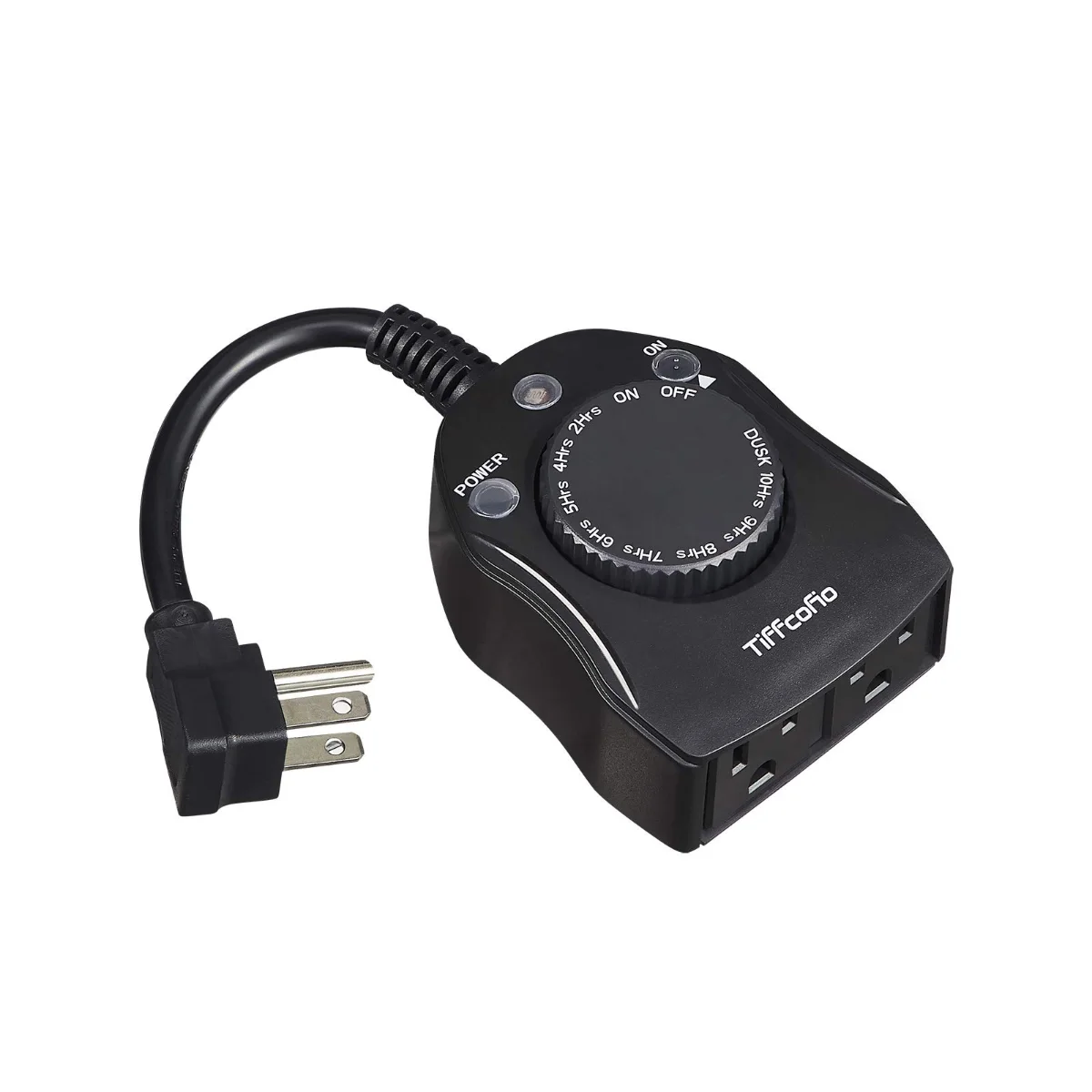
A dusk-to-dawn timer is the natural boss of holiday lights. It switches on as the street goes dark, which is around 5 p.m. in December, and off after the number of hours you set, so the lights run from dusk to bedtime every night without anyone going outside. Put it between the outlet and the stake, or pick a stake with the timer built into its head.
The stake above takes its orders from a remote that works up to 100 ft away, so you can switch to always-on for a party without putting on boots. For a plain plug-in timer, the two-outlet dusk-to-dawn model is the one people rate most:
Step 5: close the covers and look after the connections
- Close the cover on every outlet of the stake you are not using.
- Hang timers with their outlets facing down, and keep plugs and connections off wet ground.
- Check each cord and string for cuts before it goes out, as the CPSC suggests, and throw away damaged ones.
- If the GFCI trips when it rains, look for water in an open cover or a damaged string before you reset it.
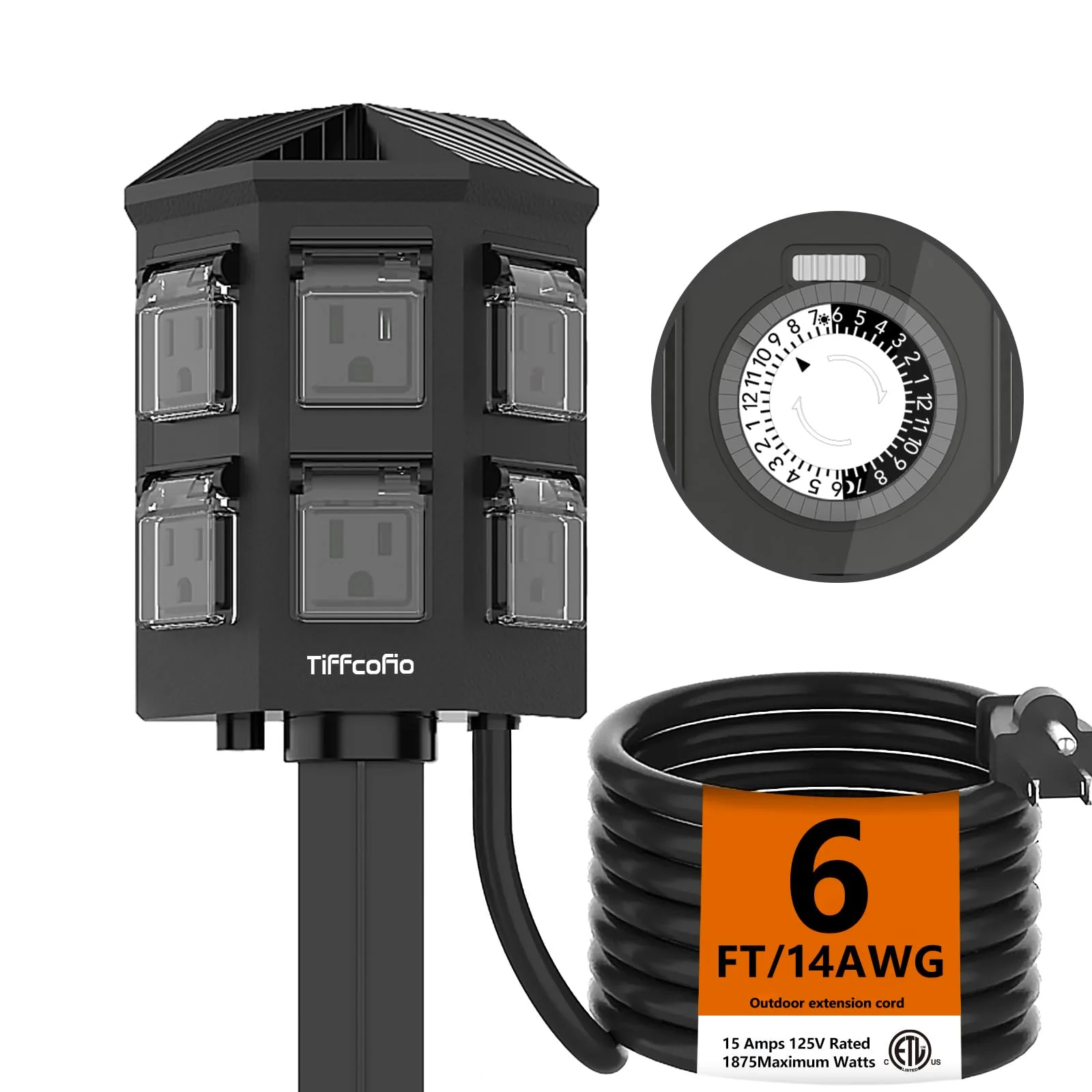
Everything on this page, from timers to stakes and splitters, sits together on the Christmas light timers page, and the power stakes shelf has every cord length.