
Cords
How long can an extension cord be? Length, gauge and amps
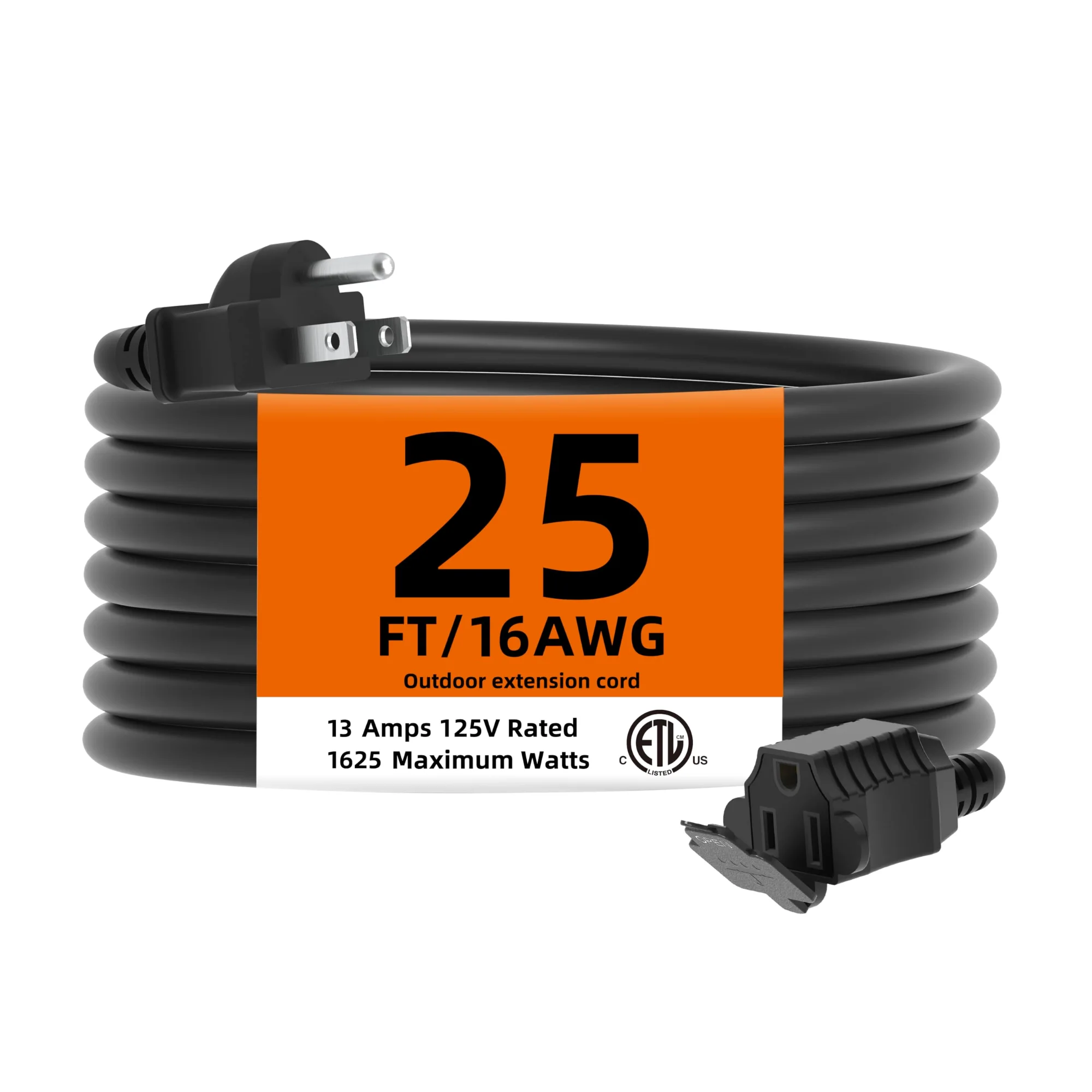
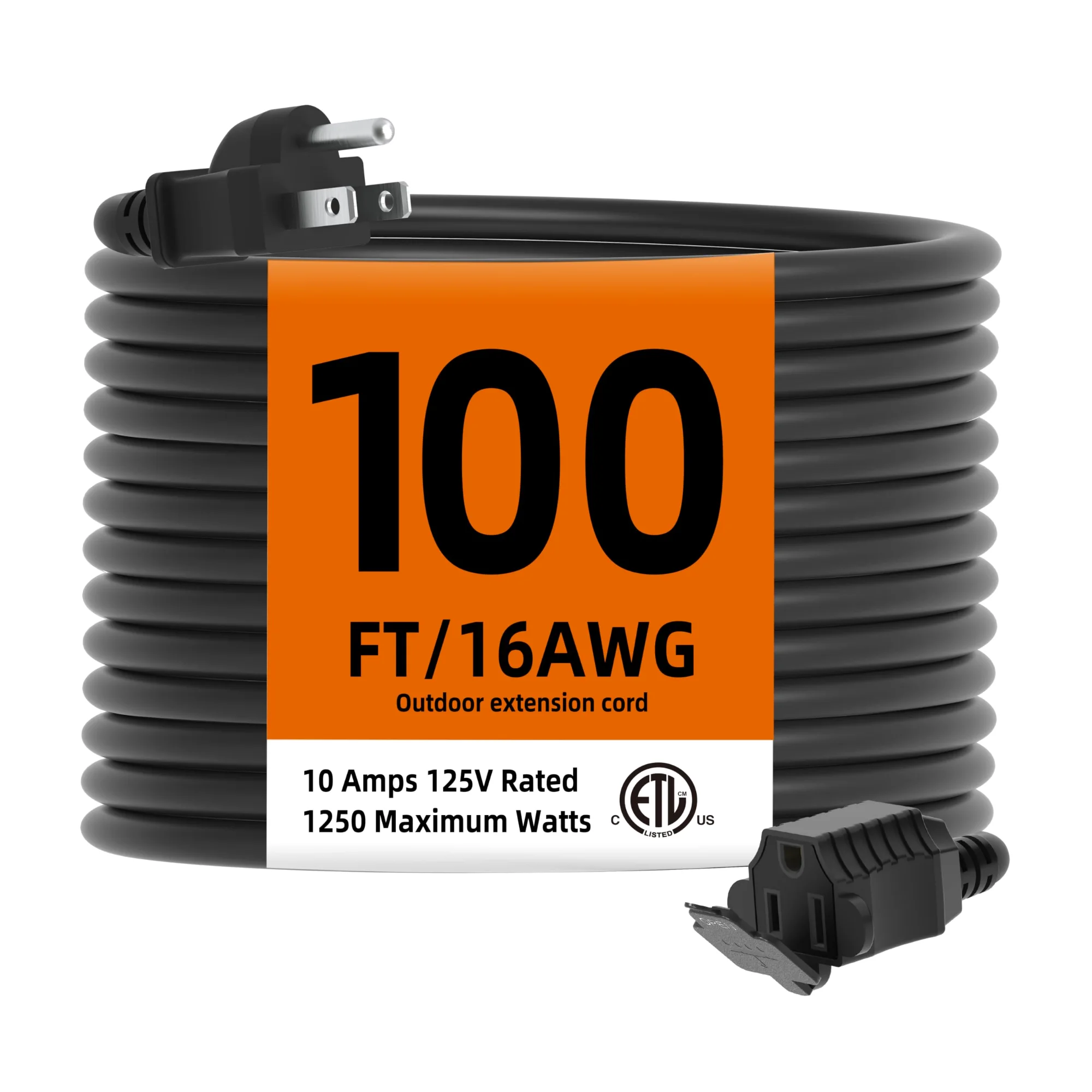
Two cords can look the same and still be rated very differently. Our indoor/outdoor cord in 16-gauge wire is rated 13 A in its shorter lengths and 10 A at 100 ft. Nothing about the plug or the jacket changes. What changes is how far the current has to travel through the same thin wire, and how warm that wire gets on the way.
Gauge: the number that counts down
The AWG number on a cord tag is the wire gauge, and it runs backwards: the smaller the number, the thicker the wire. A 14 AWG cord has heavier wire than a 16 AWG one and carries more current over the same distance. Household lamp cords are often 16 or 18 AWG. Our long surge strips and outdoor power stakes use 14 AWG, and our indoor/outdoor cords use 16 AWG.
The table to keep in mind
The Electrical Safety Foundation publishes the current each gauge should carry at each length. Here is the part of it that covers household cords:
| Cord length | Gauge | Carries up to |
|---|---|---|
| 25 to 50 ft | 16 AWG | 13 A |
| 25 to 50 ft | 14 AWG | 15 A |
| 100 ft | 16 AWG | 10 A |
| 100 ft | 14 AWG | 13 A |
| 100 ft | 12 AWG | 15 A |
| 150 ft | 14 AWG | 7 A |
Read it from the job backwards. Find the amps on the label of what you want to power, or divide its watts by 120, and pick a gauge whose row covers that current at your length.
What that means for our cords
| Product | Gauge | Lengths | Rated |
|---|---|---|---|
| Indoor/outdoor extension cord | 16 AWG | 3 to 90 ft | 13 A, 1625 W |
| Indoor/outdoor extension cord | 16 AWG | 100 ft | 10 A, 1250 W |
| 2-prong indoor extension cord | 16 AWG | 3 to 30 ft | 13 A, 1625 W |
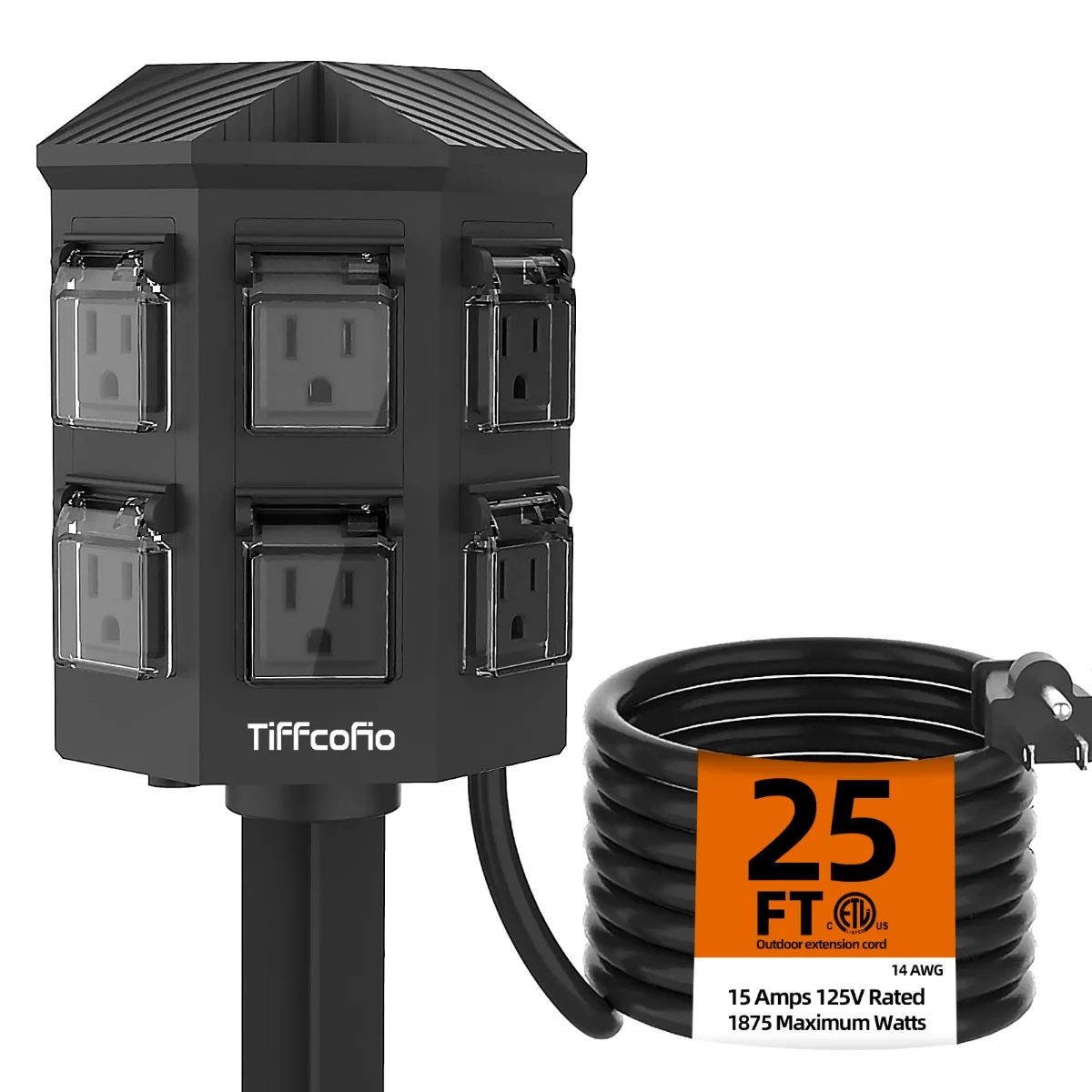
| Outdoor power stake, 6 outlets | 14 AWG | 15 to 100 ft | 15 A, 1875 W |
| 6-outlet surge protector strip | 14 AWG | 4 to 30 ft | 15 A, 1875 W |
How to measure the run
Measure the path the cord will follow, not the straight line between the outlet and the thing you are powering. A cord runs along the wall, around the corner of the deck and down the edge of the lawn, and each turn adds a few feet. Add a couple of feet of slack at each end and take the next length up. A cord that is slightly too long is fine. A cord that is too short tempts you to plug a second cord into it.
Indoors or outdoors
Outside, use a cord that is marked for outdoor use. The U.S. Consumer Product Safety Commission lists a jacket over the wires among the features an outdoor extension cord must have, and OSHA asks for 3-wire grounded cords at work. Our indoor/outdoor cords are 3-prong and grounded. The 2-prong cords with sliding shutters and the flat plug cords are for indoor use.

Habits that keep a cord cool
- Uncoil a long cord fully while it carries power. A coil holds its own heat.
- Keep cords out from under rugs and out of doorways, where they get pinched and cannot shed heat. The U.S. Fire Administration makes the same point.
- Do not plug one multi-outlet device into another. Buy a cord or a power stake long enough to reach instead.
- Treat an extension cord as a temporary fix. A cord in use every day is a sign the room needs another outlet.
- Replace a cord with a cut, a crack or a plug that feels hot.
The extension cord guide covers plugs and indoor and outdoor use in more detail, and the extension cords shelf lists every length we make.